Process
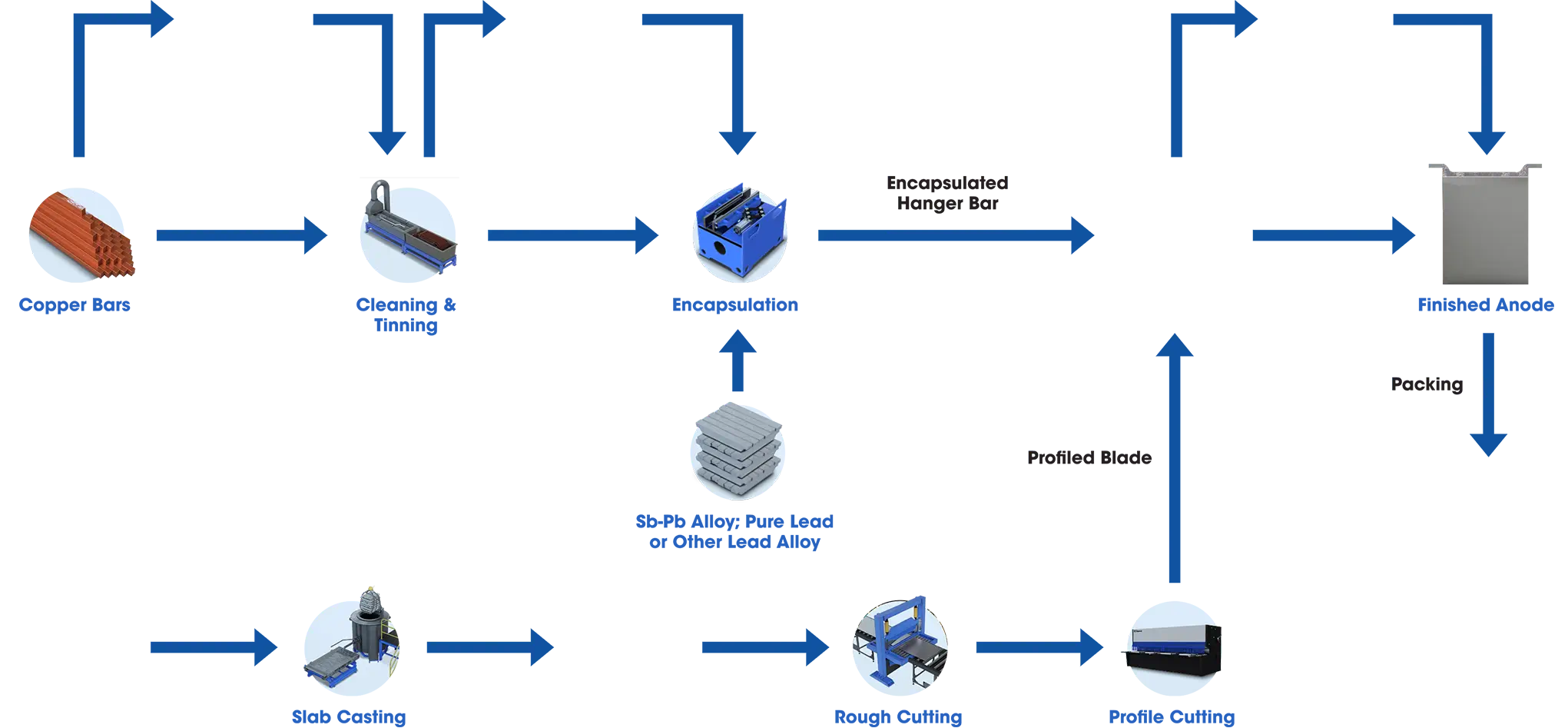
The Anode Assembly Process
Each stage of the anode manufacturing process uses the best quality raw materials and is controlled by a strict quality management system.
With our continuous commitment to research and development, both internally and through outside research institutes, CAgroup has produced a number of breakthroughs over the years in anode performance and longevity, especially in regards to the anode assembly.

Cutting & Bending
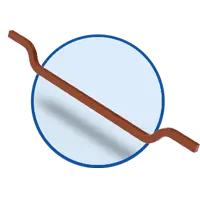
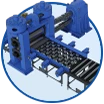
Copper bars are taken as raw material and are cut into size. Some bars are bent to configuration as required.
CAgroup can deliver any custom bar specification, according to the client’s need.
Materials: Calcium/Tin/Lead Anodes
When in use, pure lead cannot support its own weight and will creep. This creep will break the lead oxide layer on the anode surface, causing exposure of fresh lead to oxidisation and corrosion. Alloying of the lead increases the mechanical strength during use, preventing creep and thus the cracking of the oxidised surface layer and maintaining the anode shape. Lead antimony, lead tin antimony and lead silver were used for many years in copper and zinc electrowinning as alloys to provide the desired mechanical properties. With the advent of solvent extraction and electrowinning systems to produce high-purity cathode deposits, the need arose for much lower lead levels in the cathode deposit. As such, alloys with calcium were developed to reduce the level of lead deposit. As calcium lead alloys are relatively weak, tin is added to increase mechanical strength and decrease creep. Tin addition also reduces passivation when the power is interrupted.
Silver/Lead Anodes
Silver Lead Anodes are used in Zinc Electrowinning. Silver reduces the rate of corrosion over the service life. Typically, the silver content is between 0.4% and 1%. To improve the mechanical properties of the Ag-Pb anodes, allowing elements such as strontium, barium and calcium can be added.
Thermo-Mechanical Controlled Rolling: Rolled Anode
Rolled alloys used for anodes are superior to cast anodes, as the rolling process changes the cast grain structure to produce fine uniform directional grains and reduces the corrosion rate. The rolled anode is produced from large cast slabs, which cool sufficiently slowly so that all the included air and dross generated during the pouring process are removed prior to solidification before rolling. Thus, there are no oxides, air inclusions or laminations.
The rolled anode has a much finer and more uniform grain structure than cast anodes. Corrosion occurs as a fine, uniform, thin layer.
Quality Assurance/ Quality Control
All anodes supplied are hard-stamped with a unique identifying number, allowing traceability of that anode right back through the quality system. For each project, a full certification “passport” is supplied to the client, which includes material analysis, mechanical testing, tolerance control and conductivity performance.
Testing and certification are conducted at CAgroup in-house laboratory utilising state-of-the-art testing equipment to test material alloys, microstructure, hardness, mechanical properties and tolerance control.
Hook Fitting
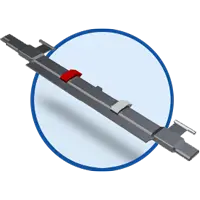
CAgroup offers a wide range of hook accessories. Hooks are added to the hanger bars per client requirements, especially in the case of anodes for Zinc Electrowinning.
CAgroup can deliver any custom bar specification, according to the client’s need.
Blasting
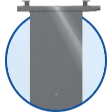
Rolled anodes used in Zinc electrowinning are usually blasted according to client specifications, such as surface roughness, to ensure optimum anode conditioning.
Assembly
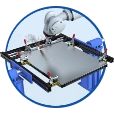
The rolled blade and the hanger bar are joined together by lead burning consisting of a full penetration stitch weld (continuous) and then, a second fillet weld.
All assembly will be carried out on custom made jigs to ensure all anodes are concentric.
After assembly, anodes will be removed from the jigs and randomly checked for verticality.
Packaging and Shipping
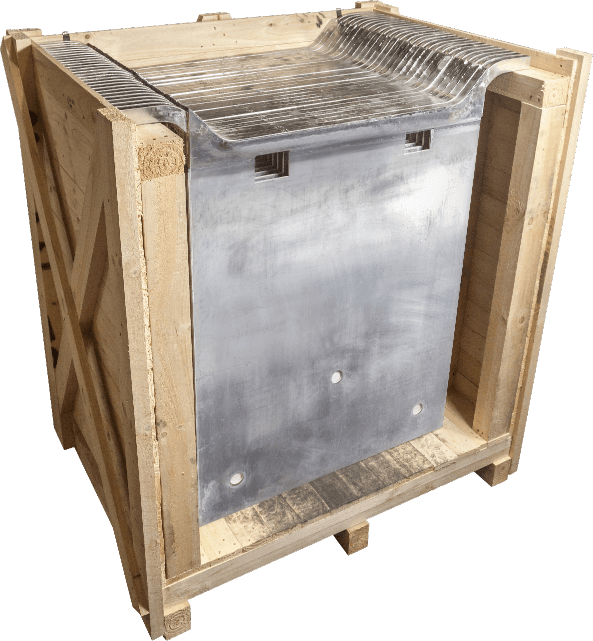
Anodes are packed vertically in purpose designed, export quality wooden crates for shipment to clients around the world.